



WE NEED YOUR HELP!
Lobby99 is a nonprofit that depends on the support of our readers.
If you found this useful, could we ask you to chip in a dollar or three to help us provide even more like this? Thanks!
It's secure and takes under a minute.
Trump reinstates Cuba travel restrictions
| 2017-Jun-25 | By: Rob Dennis |
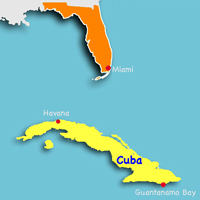
It soon will be more difficult for Americans to visit Cuba and for U.S. companies to do business there, as President Trump has announced new restrictions to the Obama administration's policy toward the country.
Individual Americans no longer will be able to travel there on people-to-people visits - booking their own accommodation and setting their own itinerary. Instead, they will need to travel in groups on a strict schedule with a licensed tour operator.
Travel still will be permitted for other reasons, including family visits and humanitarian projects.
The new policy also will bar American transactions with companies owned by the Cuban military - which runs much of the tourism industry.
The policy could prohibit Americans from riding state-run buses, buying from state-run stores or eating at state-run restaurants. It's unclear how travelers would determine which businesses fall under the prohibition. The military enterprise for state-run businesses controls an estimated 60 percent of the Cuban economy.
This will affect not only travelers, but Cubans who offer private accommodation to American visitors. According to Airbnb, 560,000 Americans have paid $40 million to Cuban hosts since April 2015. Also, while U.S. airlines still can offer flights to Cuba, the individual travel restriction could affect the demand for them.
The policy also could have an effect on Trump's personal finances. Trump has expressed an interest in opening a hotel in Cuba. Though his company said it would not pursue that while he is president, the new policy would prevent his competitors from doing so also.
The Treasury Department says the policy won't affect existing business deals. Still, once the policy takes effect, Americans no longer will be able to stay at hotels such as the Four Points by Sheraton Havana, the first U.S.-run hotel in Cuba in nearly 60 years. The hotel is owned by the Cuban military but run by a subsidiary of Marriott. Future business deals also are in jeopardy.
Though Trump said he is "canceling" the Obama administration's Cuba policy, the new policy actually would leave most of it in place:
o Cuba will remain off of the last of state sponsors of terrorism.
o U.S. airlines and cruise ships won't be barred from visiting Cuba.
o The Wet foot, Dry foot policy will not be reinstituted.
The Treasury and Commerce Departments are expected to issue regulations on the policy by the end of July. The policy would not take effect until those regulations are finalized.
Click here to read the White House Fact Sheet on Cuba Policy.
Click here to read a Treasury Department description of the current (Obama administration) Cuba Policy.
For more, read the New York Times story.
To read about Cuban reactions to the policy change, read this Politico story.
For more on how the changed policy could affect Trump's business competitors, read the CNN story.
No funding to foreign organizations that counsel on abortion
| 2017-Jan-23 | By: Barry Shatzman |
President Trump has signed an executive order that prohibits federal money going to international groups which perform abortions or provide information on abortions.
The order prevents foreign non-governmental organizations (NGO) that receive U.S. money from "providing counseling or referrals for abortion or advocating for access to abortion services in their country".
Known as the Mexico City Policy, it first was implemented in 1984 under President Ronald Reagan. Since then, it has been rescinded by every Democratic president and reinstated by every Republican president.
For more, read the BBC News story.
Obama ends Cuban immigration amnesty
| 2017-Jan-12 | By: Barry Shatzman |
President Obama has terminated the immigration policy allowing Cubans who reach U.S. land to stay in the country and become legal residents.
The Wet foot, Dry foot policy had been in effect since 1995. Cubans caught trying to enter the United States before reaching land were sent back to Cuba, Those who made it onto shore were allowed to stay.
For more, read the New York Times story.
Click here to read the Department of Homeland Security fact sheet.
Americans now allowed to visit Cuba
| 2015-Jan-15 | By: Barry Shatzman |
You can start planning for a visit to Cuba.
Starting Jan. 16, new regulations issued by the Treasury Department will allow Americans to travel to the island country 100 miles south of Florida for the first time in more than 50 years.
Technically, you still aren't allowed to go purely for tourism. However, the list of permitted reasons is broad - including journalistic, educational, or religious activities. "Support of the Cuban people" also is included in the list.
Making it easier, no pre-approval is needed from the government. And travel agents will be able to book direct flights without obtaining a special license (charter airlines for now, though commercial airlines are expected to be able to offer flights eventually).
Once in Cuba, you'll be able to use your U.S. credit card. And you'll be able bring home $100 worth of cuban cigars.
You can read the official announcement by the Department of Commerce by clicking here.
For more, read the Guardian UK story.
UN rejects proposal for independent Palestine
| 2014-Dec-31 | By: Barry Shatzman |
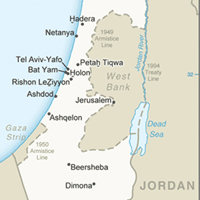
The United Nations Security Council has rejected a proposal to recognize an independent state of Palestine within 3 years.
The nation would have consisted of what now is Gaza, the West Bank, and east Jerusalem. Israel would have been required to end its occupation of those territories.
Nine votes from 15 member countries were needed to adopt the proposal. It received 8...
NO: United States, Australia.
ABSTAIN: United Kingdom, Lithuania, Nigeria, South Korea, Rwanda.
If the proposal had received the required number of votes, any of the Security Council's five permanent members still could have vetoed it. Therefore, the NO vote by the United States was enough to stop the proposal.
For more, read the Al Jazeera story.
Obama loosens restrictions on Cuba travel, business
| 2014-Dec-17 | By: Barry Shatzman |
The United States will have an embassy in Cuba and maintain diplomatic relations for the first time since 1961, President Obama announced.
The change in policy does not end the trade embargo against Cuba. Because the embargo was created by an act of Congress, only Congress can repeal it.
The new policy likely will have little effect on most Americans.
Travel restrictions to Cuba will be loosened, but you still will not be able to simply book a flight from the U.S. Travel still must be licensed for a specific purpose - such as educational, humanitarian, or religious. Family visits also are allowed.
If you do visit Cuba, you will be allowed to bring $100 worth of Cuban cigars back with you. And you will be allowed to pay for them (as well as anything else) with your American credit or debit card.
The new policy allows companies to conduct business in Cuba. You soon may be able to drink a Pepsi, shop at Home Depot, and stay in a Marriott Hotel, according to this New York Times report.
The agreement between the two countries also will expand the internet in Cuba - where only 5 percent of the population has access, according to the White House.
For more, read the New York Times story.
For more about the history of US-Cuba relations, read this Vox.com report.
You can view the President's announcement and read the White House's description of the new policy here.
UN votes to recognize Palestine as state
| 2012-Nov-29 |
The United Nations General Assembly voted to recognize Palestine as a state. Palestine becomes a non-member observer state, the same status as the Vatican.
o The United States, Israel, Canada, and six other countries opposed it.
o 41 countries - including Britain and Germany - abstained.
For more information, including some of the potential effects of the action, read the Guardian UK report.
U.S. exports to Iran increase despite sanctions
| 2012-Oct-15 |
Despite sanctions against Iran in response to its alleged nuclear weapon program, U.S. exports in food and medical equipment increased last year. Exports of pharmaceutical products decreased by almost half.
For more, read the Al Jazeera report