



WE NEED YOUR HELP!
Lobby99 is a nonprofit that depends on the support of our readers.
If you found this useful, could we ask you to chip in a dollar or three to help us provide even more like this? Thanks!
It's secure and takes under a minute.
Supreme Court - NC districts unfair to black voters
| 2017-May-22 | By: Barry Shatzman |

The Supreme Court has ruled that two of North Carolina's voting districts were designed to limit minority representation in Congress.
North Carolina has two districts with predominantly black voters. When the state's legislature created new congressional districts after the 2010 census, the number of black voters increased from 49 to 53 percent in one of those districts, and from 44 to 51 percent in the other.
By concentrating more black voters into those districts, their representation was diluted in the others.
Such forms of racial gerrymandering have been determined to violate the Constitution's Equal Protection Clause.
For more, read the USA Today story.
Click here for more about the case - Cooper v. Harris.
Supreme Court - VA districts race-based
| 2017-Mar-01 | By: Barry Shatzman |
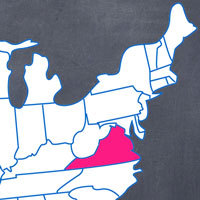
The Supreme Court has ruled that Virginia's voting districts were designed to limit minority representation in the state's government.
When they created new state districts, some districts were designed to have exceptionally high concentrations of black voters - contributing to fewer state legislators they might choose.
Such forms of racial gerrymandering have been determined to violate the Constitution's Equal Protection Clause.
For more, read the New York Times story.
Click here for more about the case - Bethune-Hill v. Virginia State Board of Elections.
Virginia restores voting rights to past felons
| 2016-Apr-22 | By: Barry Shatzman |
Virginia Gov. Terry McAuliffe has issued an executive order that will allow felons who have completed their sentences to vote.
For more, read the New York Times story.
To see how other states treat the voting status of those convicted of felonies, see this chart from the Brennan Center for Justice.
Supreme Court - AL districts unfair to blacks
| 2015-Mar-25 | By: Barry Shatzman |
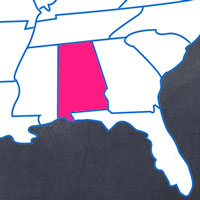
The Supreme Court has ruled that Alabama's voting districts were designed to limit minority representation in Congress.
When Alabama created new congressional district, some districts were designed to have exceptionally high concentrations of black voters - contributing to a smaller number of representatives in Congress they might choose.
Such forms of racial gerrymandering have been determined to violate the Constitution's Equal Protection Clause.
For more, read the New York Times story.
Click here for more about the case - Alabama Legislative Black Caucus v. Alabama.
Supreme Court nullifies key part of Voting Rights Act
| 2013-Jun-27 (Updated: 2013-Aug-25) | By: Rob Dennis and Barry Shatzman |
The Supreme Court ruled on June 25 that a key provision of the Voting Rights Act of 1965 violates the Constitution.
The act calls for states and congressional districts with a history of voting discrimination to pre-clear any changes to their voting practices with the federal government.
The court did not rule pre-clearance (referred to as Section 5 of the law) unconstitutional. It also acknowledged that voter discrimination still exists. It ruled, however, that the formula used to select jurisdictions for pre-clearance (those with track records of discrimination as specified in Section 4 of the act) was outdated and unfair.
The court left it up to Congress to come up with a new formula to designate jurisdictions. Until that happens, any state or district can change their voting practices without the need to have the change pre-cleared by the federal government.
Until this ruling, the Voting Rights Act has been one of the most successful laws in U.S. history. Within its first year, more than a quarter of a million new black voters had been registered. Click here to see more of how voter registration increased in the long term since it was enacted.
While the Voting Rights Act has had measurable results, that success is no reason to believe it has outlived its usefulness, Justice Ruth Bader Ginsburg wrote in her dissent.
"Throwing out pre-clearance when it has worked and is continuing to work to stop discriminatory changes is like throwing away your umbrella in a rainstorm because you are not getting wet," she wrote.
Old discrimination tactics such as poll taxes and literacy tests remain illegal. But attempts to disenfranchise minority voters have not ended. The methods simply take on new forms...
o In 2003, a Texas county announced it would eliminate all five polling places that served a predominantly-Latino part of San Antonio. The federal government refused to pre-clear the changes - hence they did not take effect.
o In 2001, the white mayor and all-white Board of Aldermen in a Mississippi town tried to cancel an election after black citizens became a majority of registered voters. The town refused to have the election until the Department of Justice required it in 2003.
o Voter identification laws are being enacted or considered in several states. The restrictions can disenfranchise hundreds of thousands of minority voters - in spite of there being little evidence of the problem they are purported to fix.
In the past 15 years, the Department of Justice has turned down 86 requests for election changes - 31 of which were after Congress reauthorized Section 5 in 2006.
But these numbers understate the problem. Between 1999 and 2005, more than 250 changes were withdrawn or replaced by altered submissions after the Department of Justice requested more information. Without Section 5, voters' only recourse is to challenge the rules in court. This is impractical for several reasons, states a Brennan Center for Justice report on the implications of Section 5 falling...
o Even if an injunction can be obtained, a jurisdiction can try again with a similar new tactic, resulting in additional costs to challenge. Section 5 pre-clearance requirements prevent this from happening.
"Without a system of pre-clearance, the public might not even know about such changes sufficiently in advance of an election to seek relief from the courts," the report states.
Shortly after the decision was announced, the Texas attorney general said the state's voter ID law, which the Department of Justice and a federal court had blocked, will take effect immediately.
Chief Justice John Roberts and Justices Antonin Scalia, Anthony Kennedy, Clarence Thomas and Samuel Alito comprised the majority in the 5-4 decision.
For more, read the New York Times story
Click here to read the Brennan Center for Justice report on the implications of making Section 5 of the Voting Rights Act unenforceable.
Click here to read the Supreme Court's ruling.
Restrictive Arizona voter registration law overturned
| 2013-Jun-18 | By: Rob Dennis |
The Supreme Court ruled Monday that states can't demand proof of citizenship from people registering to vote.
The 7-2 decision overturns an Arizona law requiring citizens to provide a driver's license issued after 1996, a U.S. birth certificate, and a passport or similar document in order to register. The law - Proposition 200 - was passed by voters in 2004.
The court ruled that the law violated the 1993 National Voter Registration Act, which requires states to accept a federal voter registration postcard that requires only the voter's signed oath that he or she is a citizen.
If a state wants to introduce extra requirements to its voter registration process, it first must obtain permission from the Election Assistance Commission.
Those who support more stringent requirements say they're needed to prevent ineligible voters from casting votes. But there has never been a case of a non-citizen being prosecuted for using the federal form. The appeals court that originally overturned the Arizona law stated, "Arizona has not provided persuasive evidence that voter fraud in registration procedures is a significant problem in Arizona; moreover, the NVRA includes safeguards addressing voter fraud.?
Restrictions such as Arizona's do, however, keep millions of people nationwide off of the voting rolls. A 2006 survey by the Brennan Center for Justice concluded that 7 percent of American citizens lack the required documents to prove their citizenship. In a statement Monday, the American Civil Liberties Union said that, of the 31,000 U.S. citizens in Arizona whose voter registration applications were denied, 90 percent were born in the United States.
The majority of those without documentation tend to be low-income or minorities.
The American Legislative Exchange Council (ALEC) has lobbied other states to adopt Arizona's law. Four of those states - Alabama, Georgia, Kansas, and Tennessee - already have adopted similar laws.
To read the Brennan Center for Justice report, titled Citizens Without Proof, click here.
For more on the ruling, read the Washington Post story