



Clean Air Act
The Clean Air Act is a series of laws that were enacted to make the air we breathe cleaner by reducing the amount of pollutants emitted by cars, factories, etc.
It was first enacted in 1963, but has been updated several times as the understanding of air pollution improved.
Click here to read our discussion of the Clean Air Act.
Climate Action Plan
A comprehensive plan proposed by the Barack Obama administration in 2013 to address Climate Change.
Click here for a fact sheet on the plan (with a link to the full plan).
Climate Change
One of the primary effects of Global Warming.
DOI Methane and Waste Prevention Rule
A 2016 rule issued by the Department of the Interior (DOI) requiring oil and gas producers to use currently available technologies and processes to cut flaring in half at oil wells on public and tribal lands.
This source of pollution is the second-largest industrial contributor to climate change in the United States, according to the Natural Resources Defense Council (NRDC).
The rule will result in a reduction of pollution equivalent to almost 1 million cars per year, and recover enough gas to supply about three-quarters of a million homes per year.
The full name of the rule is "Waste Prevention, Production Subject to Royalties, and Resource Conservation".
Click here to read the DOI announcement.
Click here to read the DOI fact sheet on the rule.
Click here to read an explanation of the rule by the NRDC.
DOI Stream Protection Rule
A 2016 rule issued by the Department of the Interior (DOI) requiring coal mining companies to avoid practices that permanently pollute streams, destroy drinking water sources, increase flood risk, and threaten forests.
Companies also would be required to monitor streams that could be affected by their mining operations.
In February 2017, Congress voted to prevent this regulation from taking effect.
Click here to read the Interior Department announcement.
Click here to read the Congressional Research Service analysis on the effects of the rule on the environment and on jobs .
Endangered Species List
A list of animal, bird, and plant species whose existence is considered at risk.
Species on the list are classified as either...
o Endangered: In danger of becoming extinct.
The list is maintained by the U.S. Fish and Wildlife Service (FWS) and the National Oceanic and Atmospheric Administration (NOAA), as specified in the 1973 Endangered Species Act.
Website: www.FWS.gov/endangered.
EPA Clean Power Plan
A 2015 policy issued by the Environmental Protection Agency (EPA) to reduce pollution from power plants.
For more, see the EPA overview.
EPA Cross-State Air Pollution Rule
You can learn more about the Cross-State Air Pollution Rule at www.epa.gov/csapr.
EPA Mercury and Air Toxics Standards (MATS)
You can learn more about the Mercury and Air Toxics Standards Rule at www.epa.gov/mats.
EPA Regional Haze Rule
A series of regulations issued to lessen haze in national parks and wilderness areas.
You can learn more about the Regional Haze Program at www.epa.gov/visibility.
Click here to view the progression of these regulations over the years.
Global Warming
This will be less of a definition than an explanation of how we discuss terms such as global warming and climate change.
First of all, those two terms often are used interchangeably. We differentiate them - referring to global warming as the rise in the earth's temperature and climate change as one of the consequences of global warming.
We will not argue whether these things are taking place. The overwhelming preponderance of evidence and concurrence among scientists makes a few things certain enough to not waste time continuing the argument in Lobby99 discussions...
o The cause is mostly due to human activity since the industrial revolution.
o The effects are tangible and will continue to become worse.
o Serious action is required to stop this trend before it becomes irreversible.
Any discussions we have involving the topic will assume the above points.
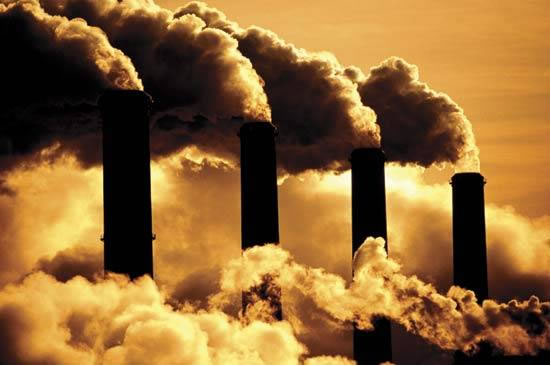
Image Source: Conserve-Energy-Future.com
To learn more about global warming and climate change, visit Climate.NASA.gov.
For a more in-depth analysis, see the 2013 Intergovernmental Panel on Climate Change report..
Great Lakes Water Compact
A 2008 agreement among the eight states bordering the Great Lakes that controls how water from the lakes can be used - with the goal being to preserve the lakes.
For more, visit www.GreatLakes.org/compact.
Greenhouse Gas
Gasses emitted into the earth's atmosphere that trap heat - increasing Global Warming.
Haze
Air pollution that obscures outdoor views.
Read more about haze at the Environmental Protection Agency website.
Microbead
A tiny plastic particle (typically smaller than a millimeter) used in cosmetic products such as liquid soap and toothpaste - generally added for exfoliation.
Because most of their use is for personal cleansing, they end up in bodies of water.
They were banned in the United States starting in 2017.
For more about microbeads , read this Canadian government report.
For more about microbeads in cosmetics , read this United Nations report.
Microbeads in soaps and cosmetics banned (2015-Dec-31)
Microplastic
Tiny (smaller than 5 millimeter) bits of plastic that are the byproducts of other products containing plastic.
Some estimates have predicted there to be more than 200 thousand tons of microplastics in the world's oceans. Sources of this microplastic pollution include...
o Tire dust that gets washed into sewers.
o Paints, such as dust from road markings.
o Larger pieces of plastic such as forks, straws, bags, takeout containers, and beverage bottles in waters that break apart into smaller and smaller pieces.
o Microbeads from personal cleansing products.
To read about some of the harm that can come from microplastics, read this National Geographic story.
Paris Climate Change Agreement
The main product of a 2015 conference in which 195 countries agreed to limit greenhouse gas emissions in order to limit the Earth's temperature rise
It went into effect on November 4, 2016.
Pollution sources
The Environmental Protection Agency (EPA) classifies air pollution by its source...
o Mobile (i.e. cars, trucks, planes)
Smog
A form of air pollution resembling a smoky fog. It is a combinations of the words smoke and fog.
Solid Waste Disposal Act
1965 law enacted to help deal with new types and increased amount of discarded materials from consumer packaging, industry, construction, and agriculture.
Click here for more about the law.
Stewardship of Ocean, Coasts, and Great Lakes
2010 Executive Order issued by Pres. Barack Obama establishing a national policy to ensure the health of ocean, coastal, and Great Lakes ecosystems and resources.
Click here to read Executive Order 13547.
Superfund
Federal program to clean up sites that have been contaminated with hazardous substances.
Originally, most of the money for the fund came from a tax on the industries that were at risk for creating the contamination. However, most of the funding since 2001 comes from public money.
It was created by the 1980 Comprehensive Environmental Response, Compensation, and Liability Act.
Click here for more about the Superfund.
U.N. Framework Convention on Climate Change
1992 international treaty for working toward limiting greenhouse gas levels in the atmosphere.
The framework does not set limits and there are no enforcement provisions. Instead, it works as a guideline for for future environmental treaties (often referred to as agreements or protocols).
U.N. Green Climate Fund (GCF)
An international fund that helps poor countries...
o Develop clean energy technologies
Website: www.greenclimate.fund.