



WE NEED YOUR HELP!
Lobby99 is a nonprofit that depends on the support of our readers.
If you found this useful, could we ask you to chip in a dollar or three to help us provide even more like this? Thanks!
It's secure and takes under a minute.
Congress proposes hiding large campaign donors from IRS
| 2016-Apr-26 (Updated: 2016-Jun-14) | By: Barry Shatzman |
The House of Representatives has passed a bill that would allow for more anonymity in contributions to 501(c) nonprofit organizations.
These organizations currently must report donations of more than $5,000 to the IRS (though these donors do not have to be revealed to the public). The bill would prevent the IRS from requesting this information.
Some of these organizations exist to channel anonymous campaign contributions into Super PACs, which can raise unlimited money to influence a campaign, but must disclose all contributions. If the contributor is a 501(c) nonprofit, the organization is listed as the contributor, while the contributors to the 501(c) itself remain anonymous.
The Preventing IRS Abuse and Protecting Free Speech Act would provide an extra layer of anonymity for those who contribute the highest amounts.
But the problem is bigger than that, according to campaign reform group Democracy 21. In a letter to Congress, the organization warns that the IRS is the only protection against illegal foreign money being spent to influence elections. Eliminating the need to report donations to the IRS would "open the door wide for secret, unaccountable money from foreign governments, foreign corporations and and foreign individuals to be illegally laundered into federal elections through 501(c)(4) groups."
The Congressional Budget Office (CBO) estimates that the bill, if enacted into law, would cost the country $16 million in revenue over the next 10 years.
In order to be enacted the bill still needs to pass the Senate and then be signed by President Obama.
For more, read the GovTrack.us report.
This article was updated June 14, 2016 to account for the House passing this bill.
Supreme Court invalidates federal campaign contribution limit
| 2014-Apr-02 | By: Barry Shatzman |
The Supreme Court has ruled that the government cannot limit the amount of money an individual can spend to influence federal elections. It was the first time that the Supreme Court has struck down a federal contribution limit.
Campaign laws restrict the amount an individual may give to a single candidate to $2,600 for each race (meaning $5,200 for both the primary and general election). They also restricted the overall amount ($123,200) that an individual can give if giving to multiple candidates.
The government still can limit the amount that an individual may give to any single candidate. However, it no longer can limit the overall amount that an individual can give.
The case was McCutcheon v. Federal Elections Commission.
In 2012, approximately 600 people gave the maximum amount of $123,200, according to this Sunlight Foundation report. It is possible that those, as well as others, might have contributed more through organizations that are not required to list donors.
For more, read the Washington Post story.
Read Lobby99 Director Barry Shatzman's perspective on this issue.
Groups targeted by IRS were violating tax-exempt provision
| 2013-May-27 | By: Barry Shatzman |
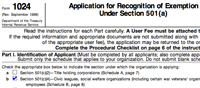
Several of the conservative groups targeted by the Internal Revenue Service when applying for tax-exempt status were acting primarily to influence elections, according to a New York Times investigation.
These organizations, referred to as 501(c)(4) Social Welfare organizations by the IRS, have been given leeway in recent years to engage in some amount of partisan political activity - the result of the Supreme Court's 2010 Citizens United decision. However, this activity cannot be their main activity if they are to be exempt from paying taxes. Otherwise, the tax exemption would be the equivalent of taxpayers subsidizing the campaigns of the biggest spenders.
Read our story on the IRS targeting of these groups and how corporations use these tax-exempt organizations as fronts to allow them to secretly fund election campaigns.
For more on the New York Times investigation, read their report.
Bill would prohibit IRS from conducting audits
| 2013-May-22 | By: Barry Shatzman |
Rep. John Fleming (LA) has introduced a bill that would prohibit the Internal Revenue Service from initiating any new audits for 6 months. Four other representatives (Dan Benishek (MI), Steve Chabot (OH), John Culberson (TX), and Thomas Rooney (FL) have signed on as cosponsors.
Fleming said the IRS should not be allowed to resume audits until Congress fully investigates the issue of targeting applications from groups with conservative-sounding names for 501(c)(4) tax-exempt status.
But approving organizations for tax exemption is a just tiny part of the agency the deal with every aspect of taxation. Of the IRS's 90,000 employees, only about 350 are involved in the approval process. Of those, 300 work in the agency's Cincinnati, OH office. Last year they processed approximately 60,000 applications. Most of those were for charities. but about 3,000 were for groups applying for 501(c)(4) status. Only 8 of those 3,000 were rejected.
Approval for tax exemptions is performed by about 350 IRS employees - almost all in the organization's Cincinnati, OH office.
This bill has been submitted to the House Ways and Means Committee. You can track its progress at GovTrack.us.
To read more about how the IRS targeted groups with conservative-sounding names for extra scrutiny when applying for tax-exempt status and what was behind it, read our report.
IRS targets conservative nonprofit applications - what's behind it?
| 2013-May-19 | By: Rob Dennis |
The Internal Revenue Service gave extra scrutiny to groups applying for tax-exempt status solely because they had conservative sounding names, the Treasury Department's inspector general reported May 14.
For 1-1/2 years, groups with phrases such as Tea Party and Patriots in their case file or whose stated issues included government spending, debt, or taxes had their applications delayed or were asked burdensome and unnecessary questions before their application was reviewed.
The IRS has been widely criticized as news of the report broke. The acting commissioner of the IRS resigned, the FBI launched a criminal investigation and Congress scheduled hearings.
All that attention masked an underlying problem, however - the sharp growth of partisan groups applying for tax-exempt status as a 501(c)(4) nonprofit. Approximately 3,000 organizations applied for 501(c)(4) status in 2012 - more than 1,000 more than each of the previous two years.
The surge came after the Supreme Court's 2010 Citizens United ruling, which allowed corporations to make unlimited contributions to groups created to advertise for a party or candidate. These Super PACs, however, are required to list their donors. So corporations wanting to shield their political actions from the public found another way - by contributing to 501(c)(4) nonprofit organizations instead. These organizations do not need to reveal their funders.
Legally, these nonprofits are supposed to exist only for social benefit. However, many appear to be merely fronts for political advertising (see our Aug, 2012 report below).
Democracy 21, a campaign finance reform organization, has asked the IRS to investigate four of the largest such groups: one liberal (Priorities USA), two conservative (Crossroads GPS and American Action Network) and one pro-third-party (Americans Elect).
Instead of investigating these very large groups however, IRS agents in 2010 began scrutinizing new applications from much smaller groups.
Democracy 21 founder Fred Wertheimer said in a Washington Post interview that the IRS was wrong from both sides.
"They got it wrong in targeting conservative groups for review based on their names and their identified interests, and they got it wrong in not investigating and acting against groups that in our view were blatantly abusing the tax laws by improperly claiming to be 501(c)(4) groups so they could keep the donors paying for their campaign activities secret from the American people," Wertheimer said.
For more, read the Pro Publica story or this New York Times story.
To read the full Washington Post interview with Fred Wertheimer click here.
You can read the full 48-page Treasury Department inspector general's report regarding the IRS's actions here.
For more details about what the IRS demanded of the groups that were unfairly targeted, read the Politico.com story.
Read our update to this story regarding groups that were targeted.
2012 Elections - Citizens United Super PACs account for more than 75%
| 2012-Sep-24 |
More than three out of every four campaign dollars spent in the 2012 election comes from policitical action committees (Super PACs) formed as a result of the 2010 Supreme Court Citizens United ruling. Much of the money is being spent to influence Congressional elections, rather than the one for president.
For more, read the Guardian story or explore the data directly in the Sunlight Foundation report.
Tax-exempt organizations form to secretly influence elections
| 2012-Aug-20 | By: Barry Shatzman |
Nonprofit corporations are being used to allow large corporations and wealth Americans to secretly fund political campaigns.
The IRS requires that these 501(c)(4) nonprofits operate mainly to enhance social welfare through education and advocacy. This is why they are exempt from paying federal taxes.
Some of these organizations, however, are merely being created and used to run political ads, even though their tax-exempt status means they are being subsidized by public money. As of August 2012, they had spent more than $70 million on ads that mentioned a presidential candidate, according to Kantar Media.
As a result of the Supreme Court's 2010 Citizens United ruling, organizations known as Super PACs were invented to provide a way corporations to donate unlimited amounts of money to influence elections. Super PACs, however, are required to name their donors. Donors to 501(c)(4) nonprofits can remain anonymous.
For more, read the Pro Publica report
Senate Republicans filibuster campaign disclosure
| 2012-Jul-19 |
For the second time this week, Senate Republicans blocked the DISCLOSE Act - an act that would require tax-exempt organizations involved in political advertising to disclose the names of anyone who contributes $10,000 or more. The majority vote to allow the bill to move forward (51-44) was short of the 60 votes required.
For more, read the CNN Story