



Supreme Court: Kentucky county clerk
States resist same-sex marriage
Same-sex marriage legal in Alabama

WE NEED YOUR HELP!
Lobby99 is a nonprofit that depends on the support of our readers.
If you found this useful, could we ask you to chip in a dollar or three to help us provide even more like this? Thanks!
It's secure and takes under a minute.
Supreme Court - Law can't base citizenship on parent's gender
| 2017-Jul-10 | By: Barry Shatzman |
The Supreme Court has ruled that citizenship laws cannot treat parents differently on account of their gender.
The 1940 Nationality Act specifies that, for someone born outside the United States with only one parent being a U.S. citizen, that parent must have lived in the country for 10 years in order for their child to be eligible for citizenship.
The law makes an exception if the citizen parent is an unwed mother - requiring that she have lived in the country for just one year.
55-year-old Luis Morales-Santana has lived in the United States since he was 13. At the time of his birth, his father was a citizen who lived in the U.S. for just under the required time - which according to the law would make Morales-Santana ineligible for citizenship. When he was ordered to be deported due to criminal convictions, he appealed - claiming that the law violated the Constitution because it provided different rules based on the gender of the citizen parent.
The Supreme Court agreed with Morales-Santana. But the ruling was of no help to him.
In her majority opinion, Justice Ruth Bader Ginsburg wrote that it wasn't the main provision of the law that was unconstitutional, but rather the special treatment offered to unwed mothers. So rather than reduce the requirement and allow Morales-Santana to become a citizen, she wrote that unwed mothers must have lived in the country for 5 years (the requirement had been reduced since the original law) in order for their children born outside the country to be eligible for citizenship.
For more, read the New York Times story.
Click here for more information on the decision in Sessions v. Morales-Santana.
Supreme Court: KY clerk must issue same-sex marriage licenses
| 2015-Aug-31 (Updated: 2015-Sep-04) | By: Barry Shatzman |
The Supreme Court ruled that a county clerk in Kentucky cannot refuse to issue marriage licenses because she claims same-sex marriages violate her religious beliefs. The case was Davis v. Miller.
Kim Davis, an elected clerk in Kentucky's Rowan County had refused to issue any marriage licenses. Kentucky Gov. Steven Beshear had instructed the state's county clerks to issue marriage licenses to all eligible couples.
The Supreme Court ruled in June that same-sex couples have the same marriage rights as opposite-sex couples.
For more, read the New York Times story.
Update 2015-Sep-3
Davis has been jailed for contempt of court. She could have remained out of jail had she authorized one of her deputies to sign marriage licenses in her place, but she refused.
For more, read the Washington Post story.
Update 2015-Sep-4
Rowan County has begun providing marriage licenses. Five out of the six deputy clerks say they will abide by the law. One deputy clerk (Davis' son) says he will not.
For more, read the BBC News story.
Editorial note: Lobby99 intends to stop following this situation in Kentucky, as Rowan County now appears to be acting within the law. We want to point out that our intent was to report on how the county's policy affected its residents and how the government responded, rather than make it about a particular person.
Google searches for high-paying jobs favor males, study shows
| 2015-Jul-08 | By: Barry Shatzman |
If you're searching for high-paying jobs on the internet, it's good to be a guy. Or at least it's good if Google thinks you're one.
A study from Carnegie Mellon University has shown that men were much more likely to be shown ads for jobs paying more than $200,000 a year. In one case, ads for a career coaching service for "$200k+" executive positions were shown to 1,852 males. The same ads were shown to only 318 females.
For more, read the story in The Guardian.
Click here to read the report from the Proceedings on Privacy Enhancing Technologies.
States resisting same-sex marriage ruling
| 2015-Jun-30 | By: Barry Shatzman |
Despite the Supreme Court ruling requiring states to treat same-sex marriages the same as opposite-sex ones, some states are looking for ways to delay implementing the rule.
o Texas is issuing marriage licenses, and clerks can be fined if they refuse to issue one. But the state's attorney general said his office would defend them in court at no cost.
o Alabama Chief Justice Roy Moore told state officials to not grant same-sex marriage licenses for 25 days - the rehearing period for the ruling.
o Court clerks in Kentucky have said they would object to issuing marriage licenses to same-sex couples.
For more, read the Guardian story.
Supreme Court: Same-sex marriage is a Constitutional right
| 2015-Jun-25 | By: Barry Shatzman |
States must treat same-sex marriage the same as they treat opposite-sex marriage, the Supreme Court has ruled.
States that have refused to issue marriage licenses to couples of the same sex now must issue them. The case was Obergefell v. Hodges.
To understand the decision and what effects it will have, see our discussion of the case.
For more, read the New York Times story.
Supreme Court: Alabama must allow same-sex marriages
| 2015-Feb-09 | By: Barry Shatzman |
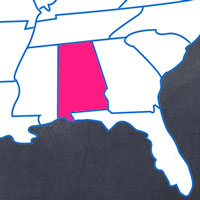
Alabama has become the 37th state to allow same-sex marriages.
In January, a U.S. District Court determined that the state's ban on same-sex marriage was unconstitutional, and gave the state until Feb. 9 to begin issuing marriage licenses to same-sex couples. Alabama's attorney general asked the Supreme Court to extend that deadline.
On Feb. 9, the Supreme Court decided not to hear the case, meaning that same-sex marriages in Alabama could begin.
For more, read the New York Daily News story.
Supreme Court will decide if states can deny same-sex marriages
| 2015-Jan-16 (Updated: 2015-Jan-19) | By: Barry Shatzman |
The Supreme Court has agreed to decide on whether individual states can deny same-sex couples the right to marry, or whether the Constitution requires that all marriages be treated equally.
Last year the Court ruled that the federal government must treat all marriages equally for residents of states where same-sex marriage is recognized (read our previous report).
Currently, 36 states and the Washington, DC recognize same-sex marriages. This case is a challenge to rulings against same-sex marriage in Michigan, Tennessee, Ohio, and Kentucky.
The Court will hear oral arguments in April and issue a decision by the end of June.
For more, read the Washington Post story.
Senate passes bill prohibiting discrimination on sexual orientation
| 2013-Nov-12 | By: Barry Shatzman |
If a company wants to deny you a job simply because of your sexual orientation or gender identity, it legally can do so in more than half of this country's 50 states.
The Senate took a step toward making this discrimination illegal when it passed the Employment Non-Discrimination Act (ENDA) on Nov. 7.
The final bill included an amendment proposed by Sen. Rob Portman protecting religious organizations from the law.
However, the bill already explicitly exempted religious organizations - using the same standard that applies to the Civil Rights Act of 1964. The amendment would prohibit the federal government from denying funding to organizations that qualify for the exemption or prevent them from obtaining government contracts.
The bill still must be passed by the House of Representatives in order to become law. House Speaker John Boehner has said he opposes the bill.
For more, read the Politico.com story.
IRS allows same-sex couples to file joint return
| 2013-Sep-02 (Updated: 2013-Sep-03) | By: Barry Shatzman |
Starting this year, same-sex couples who are legally married will be able to file joint tax returns - even if they live in a state that does not recognize same-sex marriage.
The announcement by the Internal Revenue Service on August 29 follows the Supreme Court ruling that invalidated the 1996 Defense of Marriage Act.
Same-sex couples who live in states that don't recognize their marriage could find their tax preparation a bit more cumbersome. While they now will file their federal tax return as a couple, they still might need to file their state returns as separate individuals.
And, just as opposite-sex married couples often find themselves paying more taxes than they would as individuals, many same-sex couples will face the same situation.
Not all federal agencies are dealing with the situation with the blanket approach announced by the IRS. The Social Security Administration plans to determine a same-sex couple's eligibility for spousal benefits based on whether the state they live in recognizes their marriage.
The Defense Department will provide the same health care and housing benefits to opposite-sex and same-sex couples starting September 3.
The Department of Veterans Affairs is moving slower. It denied an additional $124 monthly payment to a married veteran with Multiple Sclerosis. She is married to another woman. Had she been married to a man, the spousal-disability benefit would have been approved. A federal judge ruled on August 29 that the couple should receive the benefit.
The issue is Title 38 - the part of the U.S. code that governs veteran benefits. That law is separate from the Defense of Marriage Act, so it was not directly affected by the Supreme Court ruling. Attorney General Eric Holder has said the Obama administration would not fight challenges to parts of Title 38 that deprive same-sex couples the same rights as opposite-sex couples.
For more...
o Read the Atlantic Magazine report
o Read the Washington Blade story
o Read the letter from Secretary of Veterans Affairs Eric Shinseki explaining the VA's rationale for denying spousal benefits to same-sex couples.
Supreme Court: Same-sex couples entitled to federal benefits
| 2013-Jun-27 | By: Barry Shatzman |
The Supreme Court ruled on June 26 that married same-sex couples are entitled to federal benefits.
The 5-4 decision overturns the key provision of the 1996 Defense of Marriage Act - that federal benefits
The case, U.S. v. Windsor, involved a same-sex couple who had been living in New York. When one member of the couple died, the surviving spouse faced $360,000 in taxes that she would not have faced had her spouse been a male.
The ruling has no direct effect on states which do not recognize same-sex marriages. Because the ruling only effects those that do recognize same-sex marriages, it is unclear at this point how various federal policies will change.
For more, read the New York Times story